
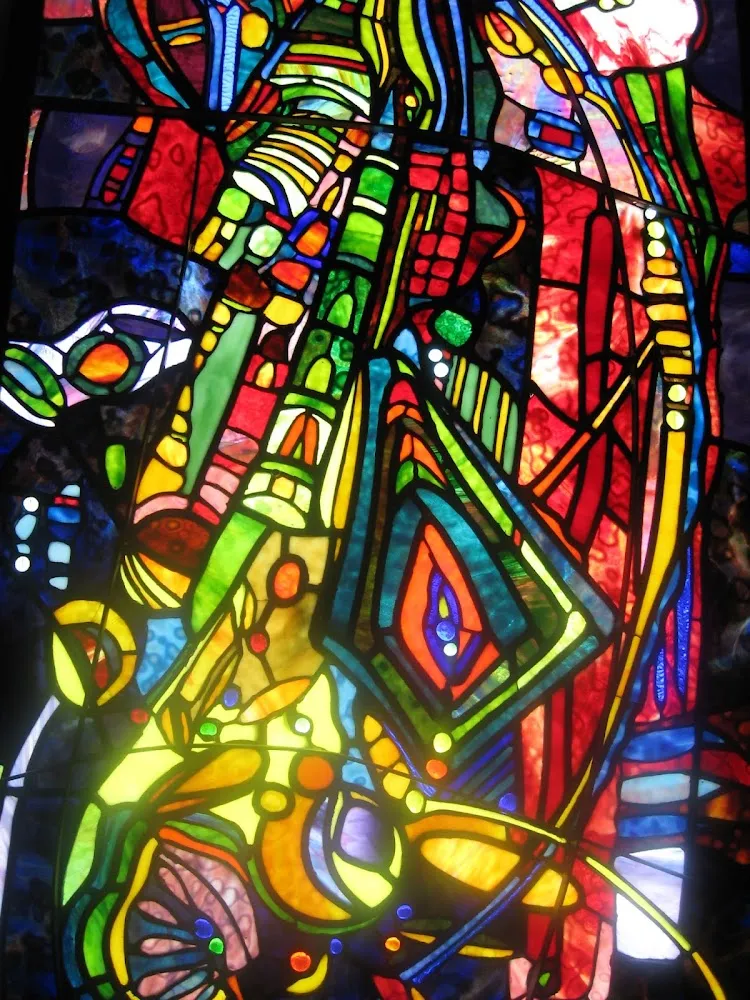
Temple Emanu-El
Temple Emanu-El is a historic Jewish congregation in Tucson whose legacy now forms part of Kol Ami Synagogue. Founded in 1910, it was the first established synagogue in what was then the Arizona Territory, before Arizona achieved statehood in 1912.
About Temple Emanu-El
Temple Emanu-El is a historic Jewish congregation in Tucson whose legacy now forms part of Kol Ami Synagogue. Founded in 1910, it was the first established synagogue in what was then the Arizona Territory, before Arizona achieved statehood in 1912. The congregation's long history is closely connected to Jewish life in Tucson and southern Arizona, and its story continues through a shared community formed with Congregation Or Chadash.
The first known Jewish settler arrived in southern Arizona in 1854. Fifty-six years later, on Rosh HaShanah Eve, October 3, 1910, Temple Emanu-El opened the first Jewish house of worship in the Arizona Territory on Stone Avenue. Rabbi E. M. Chapman of Albuquerque, New Mexico, conducted the High Holy Days services and presided at the temple's dedication. He accepted a one-year contract with the understanding that services would be conducted mostly in English, with very little Hebrew. The Stone Avenue Temple is now home to the Jewish Heritage Museum.
Twelve rabbis served Temple Emanu-El at its original Stone Avenue location. Rabbi Albert T. Bilgray was the last rabbi to lead the congregation in that building, and he continued his work as the temple developed its Religious School on Country Club Road. The chapel, office, and sanctuary building on the Country Club campus was completed and dedicated by Governor Paul Fannin on February 24, 1962. The school, which had grown to 500 students, was dedicated four years later. In 1966, the Religious School also opened a branch in Nogales, Arizona, with 25 students.
Temple Emanu-El's history includes a succession of congregational leaders and enduring cultural resources. Rabbi Joseph Weizenbaum assumed leadership in 1972 after Rabbi Bilgray's retirement, and Rabbi Bilgray was later elected Rabbi Emeritus. In 1973, Charles and Mrs. Gordon established the Carol Gordon Fist Gallery of Judaica in memory of their daughter. The gallery contained art and religious objects. Rabbi Weizenbaum retired in 1994 and was elected Rabbi Emeritus. Rabbi Thomas Louchheim then served on an interim basis, followed by three rabbis who served the congregation until Rabbi Samuel M. Cohon was hired in 1998. He served for 19 years, after which Rabbi Educator Batsheva Appel became rabbi before Temple Emanu-El joined with Congregation Or Chadash.
The union took shape in 2020, when Rabbi Scott Saulson was hired as Interim Rabbi to work with the clergy and boards of both congregations. The new synagogue became Kol Ami, meaning "All Of My People," with the mission "To Be A Home Of Joyful Judaism For All." The name and mission received overwhelming endorsement from both memberships. The two congregations brought together their religious, social, and managerial traditions, with Kol Ami locating on the Country Club campus. Temple Emanu-El invested in renovations to the interior and exterior of the facility to provide a physically safe home for both communities. For Tucsonans, Temple Emanu-El remains a significant community resource and a legacy of Jewish worship, education, culture, and connection in southern Arizona.