
Flandrau Science Center and Planetarium
Planetarium shows, laser-light shows & interactive exhibits star at this astronomy museum.
About Flandrau Science Center and Planetarium
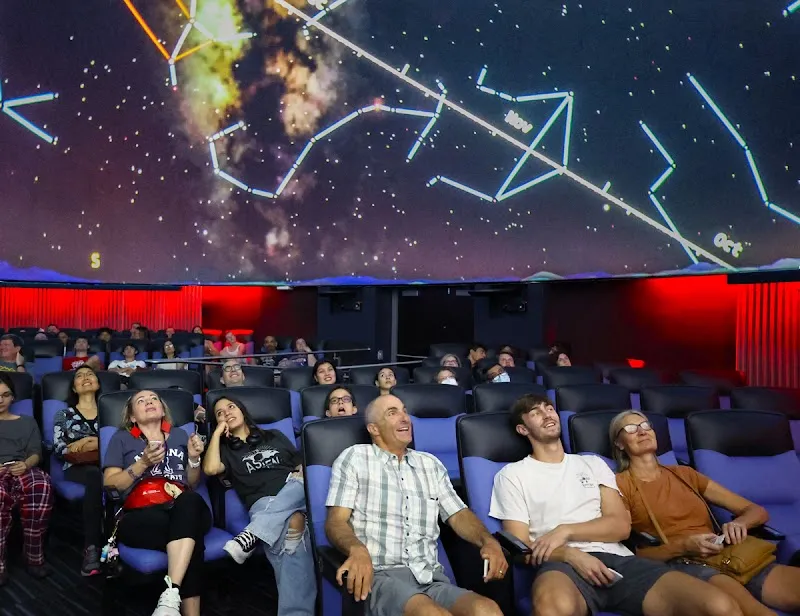
Flandrau Science Center and Planetarium is a University of Arizona science center in Tucson, combining planetarium presentations, interactive exhibits, astronomy programming, and hands-on learning. Located on the university campus, it serves Tucson and Southern Arizona with opportunities to explore space, science, technology, the natural world, and the history of scientific discovery. Its programming includes regular planetarium shows, laser-light music nights, an observatory, and exhibits designed to make scientific ideas accessible to a broad public audience.
The center's exhibit offerings span several areas of science. Visitors can explore "Mysteries of the Cosmos" and "Universe of Science," along with "Undersea Discovery," "Wild World of Bugs," "Sharks: Magnificent & Misunderstood," "Destination: Mars," and "The Fossil Corner." Together, these exhibits extend the experience beyond astronomy, connecting cosmic questions with subjects including marine life, insects, fossils, planetary exploration, and the living world. The center also presents planetarium shows at scheduled times, giving guests a way to experience astronomy through the dome theater.
Flandrau's educational work includes school field trips, classic field trips, discovery programs, group visits, teacher resources, and learning resources. Its Fusion Camps provide additional science learning opportunities, with fall, spring, and summer programs listed on the center's website. The observatory and Skywatcher's Guide add resources for people interested in observing and understanding the night sky. Private events and birthday parties are also part of the center's visit options, while accessibility information is available for guests planning their experience.
The institution's roots reach back to the late 1950s and early 1960s, when University of Arizona scientists including Bart Bok, Gerard Kuiper, Aden Meinel, A.M.J. "Tom" Gehrels, and Georges Van Biesbroeck helped establish strong university programs in astronomy, planetary science, and optics. In 1972, university leaders and the Arizona Board of Regents advanced the creation of a planetarium for a community located in what the institution describes as the astronomy capital of the world. The Grace H. Flandrau Planetarium was supported by a 1972 bequest from Grace H. Flandrau, an author and frequent winter visitor to Tucson. Construction began in 1974, and the doors opened to the public in 1975.
The original vision called for more than a public attraction. The planetarium was intended as an instructional facility for the university, a resource for Arizona school districts, a place to interpret contemporary science for the community, and a research facility for studies involving perception, orientation, and related topics. That commitment to public education remains central to Flandrau's identity. The center marked five decades of science discovery and community programming in 2025, including a free admission day with exhibits, planetarium shows, and hands-on learning, as well as a temporary history exhibit focused on the people, technology, and milestones that shaped Southern Arizona's science center and planetarium.
Flandrau is open Tuesday through Sunday and is closed on Mondays, Thanksgiving, and Christmas. Guests can check the current planetarium schedule and exhibit information before visiting, since showtimes and special events vary. The center also offers memberships, gift passes, planetarium show sponsorships, and support options. Its Tucson campus setting, educational programs, and combination of exhibits and scheduled shows make it a place to begin with a single topic, such as Mars or the cosmos, and continue into a wider survey of science.