
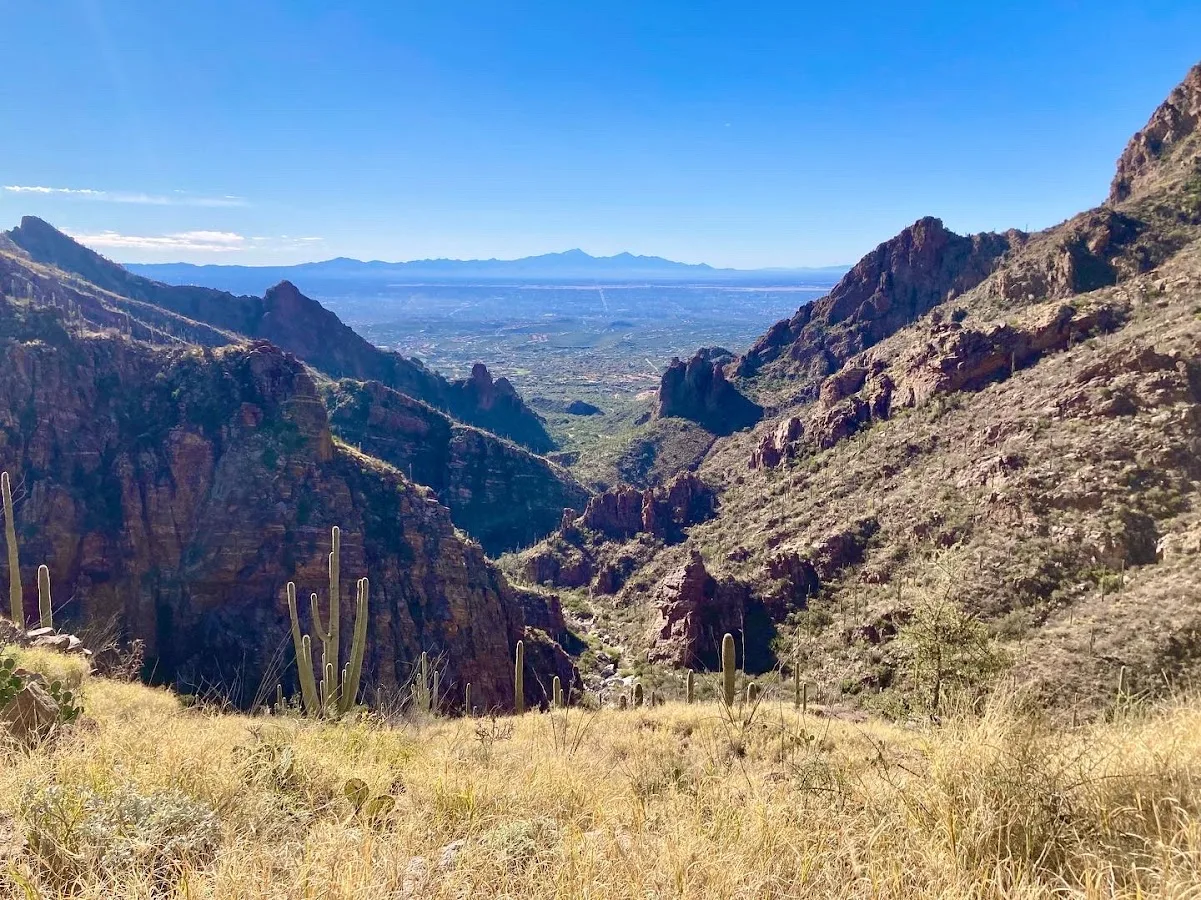
Ventana Canyon Trailhead
Distance
12 miles
Duration
6-8 hours
Difficulty
Hard
About Ventana Canyon Trailhead
Ventana Canyon Trailhead offers one of Tucson’s most rewarding and demanding introductions to the Santa Catalina Mountains. Located at 6601 N Resort Dr, near the Ventana Canyon Resort, the trail begins in the city’s northeastern foothills and quickly leaves the developed landscape behind. Rated hard, the route covers approximately 12 miles and usually takes six to eight hours to complete, depending on pace, stops, and trail conditions. Its 4.7 out of 5 Google rating, with the number of reviews not specified, reflects the experience many hikers find memorable: a strenuous desert journey with impressive mountain scenery throughout.
The trail climbs steadily through classic Sonoran Desert terrain, where saguaros stand among paloverde trees, ocotillos, prickly pear, and rugged granite slopes. As the path gains elevation, the scenery changes noticeably. Tucson spreads across the valley below, while the Catalina Mountains rise in layered ridges around the canyon. The route includes rocky stretches, uneven footing, steep grades, and sections that demand careful attention, especially after rain. Hikers encounter exposed areas with little shade, so the trail rewards an early start and a realistic assessment of fitness, water, and daylight.
Ventana Canyon feels especially distinctive because it combines close access to Tucson with the scale and wildness of a mountain backcountry route. The canyon walls create a dramatic corridor into the Catalinas, and the trail’s higher viewpoints reveal broad views toward the city, the Tucson Mountains, and the surrounding Sonoran Desert. Depending on recent rainfall, seasonal pools or small cascades may appear in the canyon, adding another layer of interest to the granite landscape. Wildlife sightings can include desert birds, lizards, jackrabbits, mule deer, and, occasionally, larger animals such as javelina or black bear. Visitors give wildlife plenty of space and avoid approaching or feeding any animal.
Cooler months, particularly October through April, generally provide the most comfortable hiking conditions. Spring can bring colorful desert blooms, while fall offers crisp mornings and clearer mountain views. Summer hikers leave before sunrise, carry substantial water, and monitor heat advisories. Monsoon storms require extra caution because sudden rain can make rocky surfaces slippery and create dangerous runoff in narrow canyon areas. The trail has a remote feel once hikers move beyond the entrance, so sturdy footwear, sun protection, food, navigation tools, and a charged phone are important. Facilities are limited compared with an urban park, and visitors check current access, parking, and trail conditions before arriving.
Ventana Canyon Trailhead suits experienced hikers, strong walkers seeking a full day outdoors, and visitors who want to experience Tucson beyond its neighborhoods and museums. It is less appropriate for casual strolls, very young children, or anyone unprepared for a long, demanding route. The combination of desert plants, mountain geology, changing elevations, wildlife, and expansive city views makes the trail a defining Tucson adventure. Visitors who are ready for the climb should experience Ventana Canyon for themselves.