
Chiricahua National Monument
Majestic, nearly 12,000-acre national park with unusual rock formations, many hiking trails & more.
About Chiricahua National Monument
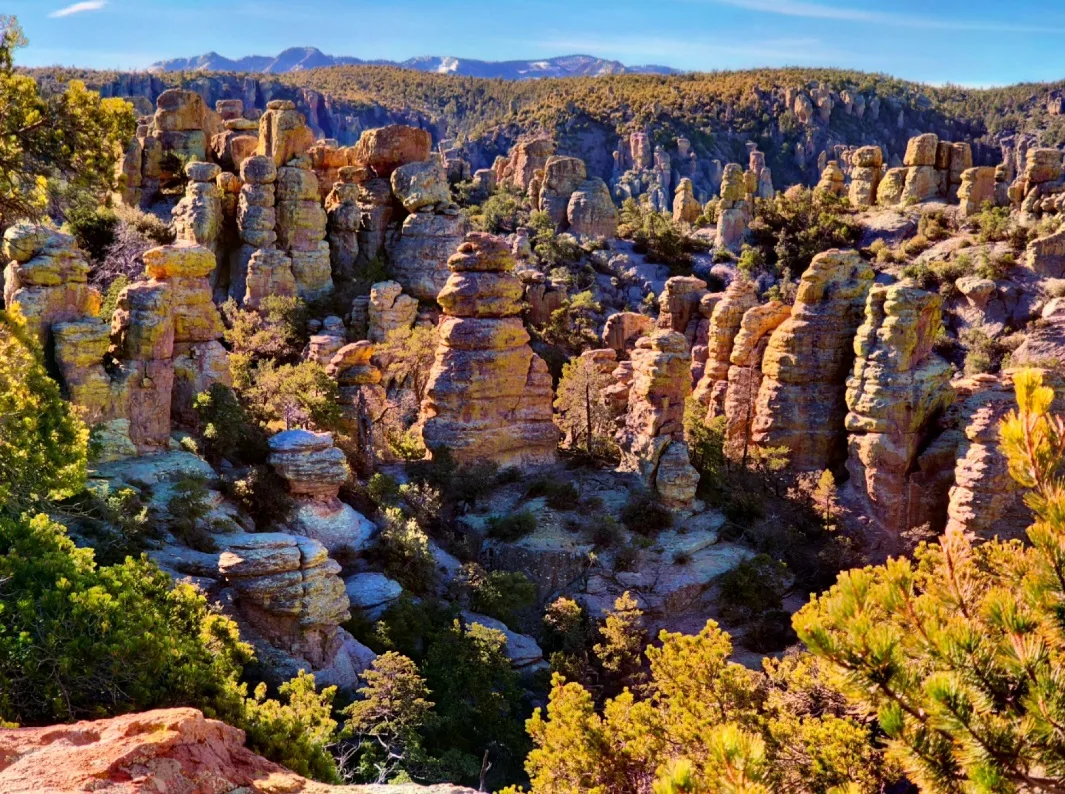
Chiricahua National Monument, located at 12856 East Rhyolite Creek Road, offers one of southern Arizona’s most memorable escapes from Tucson. About two hours southeast of the city, near Willcox, this nearly 12,000 acre protected landscape feels far removed from the Sonoran Desert’s familiar cactus country. Volcanic eruptions and centuries of erosion shape the monument’s signature scenery, creating towering columns, balancing rocks, narrow passages, and fantastical stone figures known as hoodoos. The result is a maze of pale rhyolite formations set among pine, oak, juniper, and open mountain meadows. With a Google rating of 4.9 out of 5, Chiricahua stands out as a destination that consistently leaves visitors amazed.
The experience begins at the visitor center, where travelers can gather maps, learn about the area’s volcanic origins, and ask rangers about current trail and road conditions. The scenic drive climbs through the monument, revealing broad views of the rock wilderness and access to overlooks such as Massai Point. Picnic areas provide quiet places to pause, while the nearby campground makes an overnight stay possible for visitors who want to experience the changing light and cooler mountain air. Chiricahua’s atmosphere is peaceful and spacious, with birdsong, wind through the trees, and an impressive sense of solitude. Clear nights also offer excellent opportunities for stargazing far from Tucson’s city lights.
Hiking is the best way to understand the monument’s unusual geology. Trails wind across uneven ground, steep slopes, stone stairways, and narrow corridors, so sturdy footwear and plenty of water are important. The Echo Canyon Trail leads through dramatic walls of hoodoos and sculpted rock, while the Heart of Rocks Loop passes some of the monument’s most remarkable formations, including balanced and twisted stones that appear almost animated. The longer Echo Canyon, Rhyolite Creek, and Sarah Deming trails connect different environments, moving from shaded forest to open overlooks and densely packed rock gardens. Balanced Rock, visible along the scenic drive and nearby trails, is a favorite landmark for photographs.
Wildlife adds another layer to the visit. Mule deer, javelina, gray foxes, squirrels, lizards, and a wide variety of birds inhabit the monument, and patient observers may spot coatimundis or black bears in quieter areas. Spring brings blooming plants and comfortable hiking temperatures, while autumn paints the higher elevations with changing leaves. Summer mornings can be pleasant, but thunderstorms, heat, and sudden flash floods require caution. Winter often brings crisp air, occasional snow, and fewer visitors, making it especially appealing to photographers and travelers seeking calm.
Chiricahua is ideal for hikers, families with older children, birdwatchers, photographers, geology enthusiasts, and anyone looking for a distinctive day trip from Tucson. Its combination of accessible overlooks, challenging trails, mountain forests, and surreal rock scenery gives it a character unlike any other nearby attraction. Visitors who want to see the dramatic side of southeastern Arizona should make the journey and experience Chiricahua National Monument for themselves.