
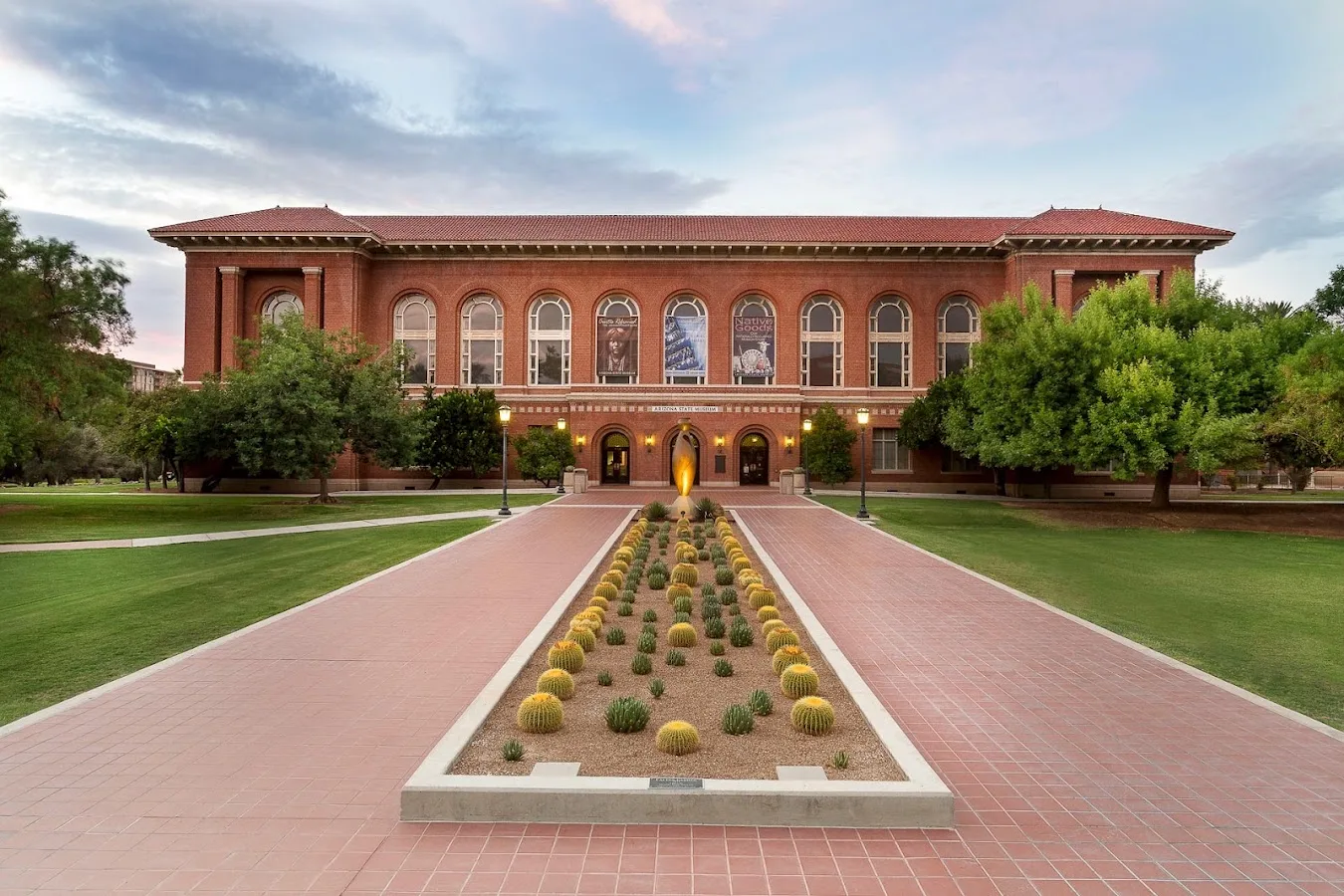
Arizona State Museum
Opened in 1893, this University of Arizona museum showcases Southwestern artifacts & culture.
About Arizona State Museum
At 1013 E University Blvd, the Arizona State Museum offers one of Tucson’s richest introductions to the people, places, and traditions of the Southwest. Opened in 1893, this University of Arizona museum is the oldest and largest anthropology museum in the state, and its galleries reveal a region far more complex than the familiar images of desert and cactus. Visitors move through displays of pottery, baskets, textiles, tools, jewelry, and ceremonial objects, each connected to the living cultures and long histories of Indigenous communities across Arizona and the broader Southwest. With a Google rating of 4.5 out of 5, the museum is a well regarded stop for anyone curious about the area.
The experience begins with the remarkable scale and variety of the collections. The museum holds an especially important gathering of Southwestern pottery, from ancient vessels made by ancestral communities to contemporary works that show how artistic traditions continue to evolve. Detailed designs, carefully shaped surfaces, and evidence of firing techniques give visitors a close look at both craftsmanship and daily life. Basketry and woven materials reveal another kind of expertise, with plant fibers transformed into objects that serve practical, artistic, and cultural purposes. Archaeological exhibits place these works in context, explaining how communities adapt to the desert, manage water, trade across great distances, and preserve knowledge through generations.
Rather than treating Native cultures as a subject locked in the past, the museum presents American Indian history and identity as continuing stories. Exhibits such as Paths of Life: American Indians of the Southwest introduce the distinct histories of regional nations, while displays devoted to pottery, weaving, and other forms of making emphasize the connection between ancestral practice and contemporary expression. Labels and interpretive material help visitors understand symbolism, materials, and community perspectives without overwhelming the objects themselves. The result is an experience that rewards both a brief visit and a slower, more thoughtful exploration.
The museum works especially well for first time visitors to Tucson, families with older children, university visitors, history enthusiasts, and anyone planning trips to nearby archaeological sites or tribal communities. It is also a strong choice during the hottest part of the day, when the air conditioned galleries provide a calm break from the Sonoran Desert sun. Weekday mornings often feel quieter, while afternoons and weekends can bring more families and campus activity. Visitors benefit from allowing at least an hour, and longer if they want to read the interpretive panels and examine the intricate objects closely. Its University of Arizona setting also makes it easy to pair with a walk through the historic campus and nearby Fourth Avenue or downtown Tucson.
The Arizona State Museum stands apart because it connects Tucson directly to the cultural landscape surrounding it. Its collections do not simply display beautiful artifacts, they explain how people live with desert environments, sustain artistic traditions, and define community across centuries. Anyone seeking a deeper understanding of Arizona should make time to experience it for themselves.